


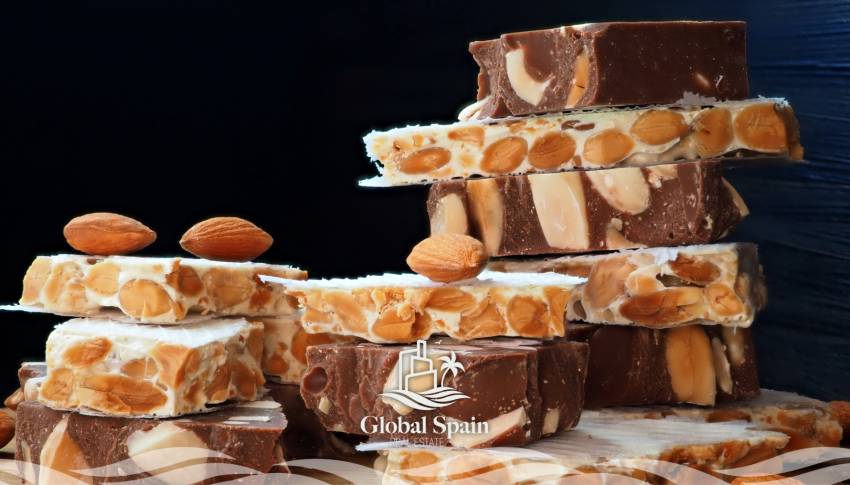
Turrón: The sweet heart of Spanish tradition
When you think of Spain, you might think of flamenco, sun-drenched beaches, or tapas. But around the holidays, especially Christmas, there's one sweet tradition that's omnipresent: turrón . This delicious almond and nougat dessert is more than just a treat; it's a piece of Spanish history and culture cherished for centuries.
Origin and history
Turrón has its origins in Moorish times , around the 8th century, when Arab culture spread across the Iberian Peninsula. The Arabs introduced almonds, honey, and sugar, ingredients that would form the basis for the first turrón. The city of Alicante is considered the birthplace of Spanish turrón. It was here that the famous Alicante turrón , known worldwide, was developed. In Jijona (Xixona) , the famous turrón de Jijona , a soft variety that melts in the mouth, was created.
How is turrón made?
The classic turrón consists of three core ingredients: almonds, honey, and sugar , often supplemented with egg whites to form the nougat texture. Hard turrón, Turrón de Alicante , contains whole almonds in a firm nougat mixture, while soft turrón, Turrón de Jijona , uses finely ground almonds for a creamy texture. Modern variations add chocolate, pistachios, fruit, or coffee.
Flavors and variations
Turrón is versatile and popular around Christmas: chocolate with nuts, fruit, orange, pistachios, caramel, and spices gives each bar a unique twist. Supermarkets and craft stores offer a wide selection each year, from classic blocks to handy bars.
Turrón and Spanish culture
Turrón is a cultural icon. It's traditionally eaten during Christmas and New Year's, and families enjoy the rich almond-honey combination together. In Jijona and Alicante, you'll find museums, workshops, and annual festivals dedicated to this delicacy, making it a popular tourist attraction.
Practical information
Only turrón produced in Jijona and Alicante can officially bear the name, thanks to the EU's Protected Geographical Indication. Hard turrón keeps for months in a cool, dry place; soft varieties have a slightly shorter shelf life.
Conclusion
Turrón is a sweet journey through Spanish history . From its Moorish origins to modern variations, it reflects tradition, craftsmanship, and a sense of taste. Whether you choose crispy cubes from Alicante or creamy pasta from Jijona, every piece of turrón is a piece of culture, celebration, and pure sweetness. With every bite, you'll savor centuries-old traditions and the warm coziness of Spanish Christmas Eves.